Hong Kong vs Singapore Fund Tax Comparison: Tax Environment for Private Equity Funds and Hedge Funds
跨境规划
2026-01-13 · 13 min read
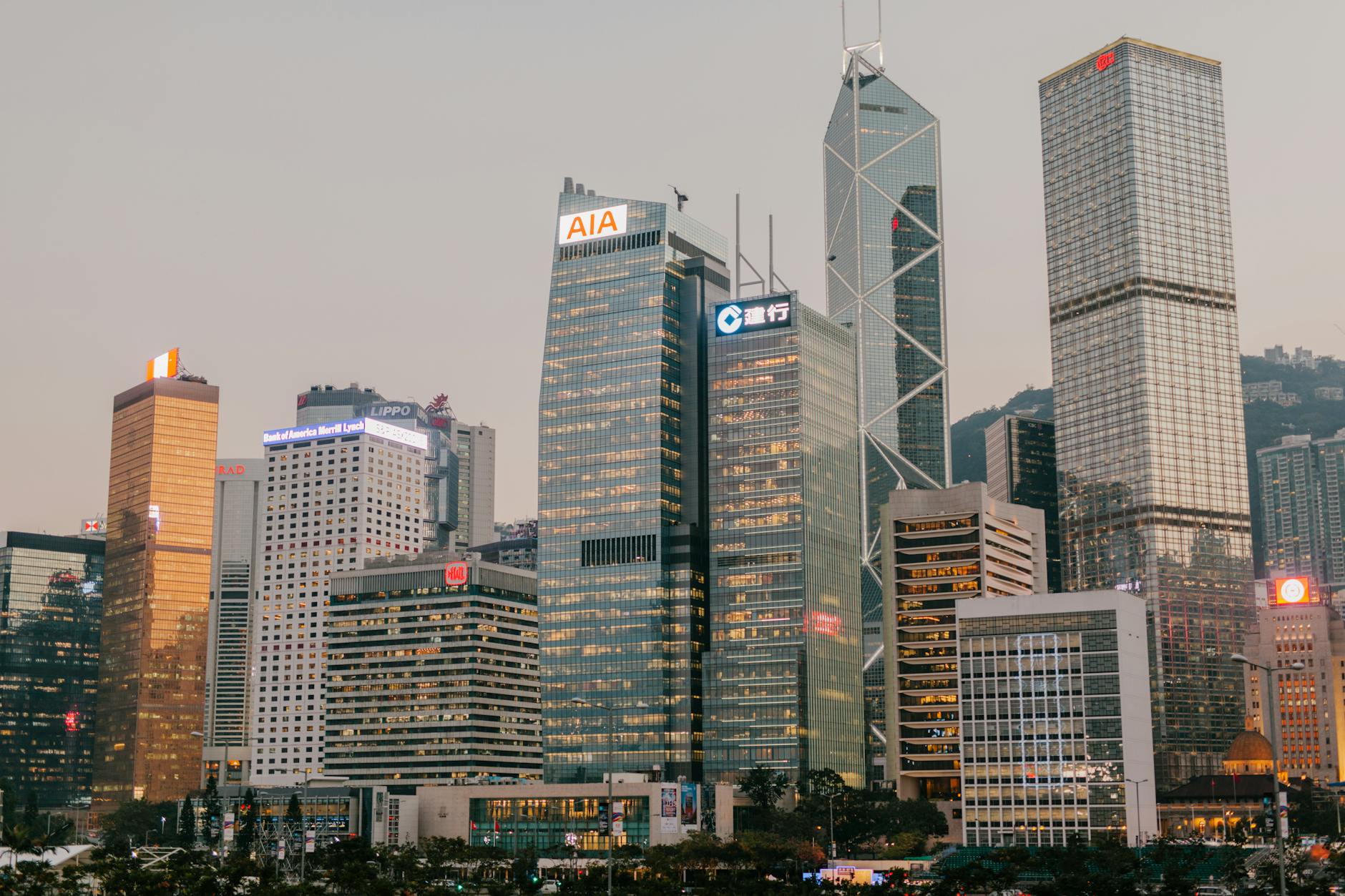
The second half of 2025 has seen a measurable recalibration in Asian fund domiciliation flows, driven by Hong Kong’s enhanced limited partnership regime and Singapore’s tightening of its Variable Capital Company (VCC) grant framework. The Hong Kong government’s extension of the unified profits tax exemption for funds (Inland Revenue Ordinance, Cap. 112, s. 20AN) to cover all onshore and offshore private equity and hedge fund structures, effective from the 2025-26 year of assessment, has directly challenged Singapore’s long-held dominance in the sector. Concurrently, the Monetary Authority of Singapore’s (MAS) updated circular on the enhanced-tier fund tax incentive scheme (dated 1 April 2025) introduced stricter economic substance requirements for family offices and single-family funds. For tax counsel advising cross-border fund managers, the choice between Hong Kong and Singapore is no longer a simple comparison of headline tax rates but a structural decision involving fund vehicle design, investor treaty access, and operational substance costs. This analysis examines the current tax environments for private equity and hedge funds in both jurisdictions, drawing on the latest legislative amendments and regulatory guidance.
The Fund Vehicle: Limited Partnership vs. Variable Capital Company
Hong Kong’s Limited Partnership Fund Regime
Hong Kong’s Limited Partnership Fund (LPF) regime, operational since August 2020 under the Limited Partnership Fund Ordinance (Cap. 637), has become the default vehicle for private equity and hedge fund managers seeking a common law foundation with minimal regulatory friction. The LPF is not a separate legal entity, which aligns with the structural preferences of most international fund managers who require the general partner to retain full management control while limited partners enjoy liability protection capped at their capital contribution.
The tax treatment of an LPF is governed by the unified profits tax exemption under s. 20AN of the Inland Revenue Ordinance. For a fund that qualifies as a “fund” under the definition — broadly, any collective investment scheme or arrangement that satisfies the genuine diversity of ownership condition — all profits derived from qualifying transactions (including shares, stocks, debentures, and futures contracts) are exempt from Hong Kong profits tax, regardless of whether the transaction is executed in Hong Kong. This exemption applies to both onshore and offshore funds, removing the previous distinction that required offshore funds to meet the “specified investment transaction” test. The 2025 legislative amendment extended this exemption to cover carried interest distributions to fund managers, provided the carried interest is derived from qualifying investment transactions and the manager holds a valid SFC license or is an exempt fund manager under the Securities and Futures Ordinance (Cap. 571).
Singapore’s Variable Capital Company Structure
Singapore’s Variable Capital Company (VCC), introduced under the Variable Capital Companies Act 2018, offers a corporate fund structure that can issue and redeem shares without shareholder approval, providing operational flexibility for open-ended hedge funds. Unlike the Hong Kong LPF, the VCC is a legal entity with separate legal personality, which can be advantageous for funds seeking to enter into contracts or hold assets directly in the fund’s name.
The tax incentives for VCCs are administered through the Singapore Income Tax Act 1947, specifically the Enhanced-Tier Fund Scheme (Section 13U) and the Standard Tier Fund Scheme (Section 13O). Under the enhanced-tier scheme, which is the preferred route for larger funds, qualifying income from designated investments is tax-exempt, with no cap on fund size. However, the MAS circular of April 2025 introduced a critical change: for VCCs applying for the enhanced-tier scheme after 1 July 2025, the fund must incur minimum annual business spending of SGD 200,000 in Singapore, and at least two full-time investment professionals must be based in Singapore. This represents a significant increase from the previous requirement of SGD 100,000 in annual spending and one professional.
Comparative Structural Implications
The choice between an LPF and a VCC often hinges on the fund’s investor base and distribution strategy. Hong Kong’s LPF, lacking separate legal personality, may face challenges in jurisdictions that require a corporate entity for treaty access or regulatory approvals. Conversely, the VCC’s corporate structure can facilitate direct investment in certain treaty-protected assets, particularly in ASEAN markets where Singapore has a broader treaty network than Hong Kong. As of 2025, Singapore has 90 comprehensive double tax agreements in force, compared to Hong Kong’s 47. For a private equity fund targeting investments in Indonesia, Vietnam, or Thailand, the VCC structure may provide more efficient withholding tax outcomes on dividends and interest.
Tax Exemption Regimes: Scope, Conditions, and Carried Interest
Hong Kong’s Unified Exemption and the Carried Interest Concession
Hong Kong’s unified profits tax exemption for funds, codified in s. 20AN of the IRO, applies to all funds that are “qualifying funds” — defined as funds that have at least four investors and total capital commitments of at least HKD 100 million, or funds that are regulated by the SFC. The exemption covers all transactions in “qualifying assets,” which include securities, futures contracts, foreign exchange contracts, and commodities, provided the transaction is not a “trading in goods” or a “retail transaction.”
The critical development for fund managers is the carried interest concession, introduced by the Inland Revenue (Amendment) (Taxation of Carried Interest) Ordinance 2023 and refined in the 2025 legislative session. Carried interest received by a licensed fund manager or an exempt fund manager is treated as 100% assessable to profits tax, but at a concessional rate of 0% for the first HKD 5 million of carried interest per year of assessment, and at a flat rate of 8.25% (half the standard profits tax rate) on any excess. This concession applies only if the carried interest is derived from qualifying investment transactions and the fund manager has at least HKD 1 billion in assets under management (AUM) in Hong Kong, or employs at least five full-time investment professionals in Hong Kong.
Singapore’s Tiered Exemption and the Carried Interest Framework
Singapore’s Section 13U (enhanced-tier) and Section 13O (standard-tier) schemes provide tax exemption on specified income from designated investments. The enhanced-tier scheme, which is the more attractive option for funds with AUM exceeding SGD 50 million, exempts all income from designated investments, including gains from disposal of investments, interest, dividends, and foreign exchange gains. The fund must be a VCC, a limited partnership, or a trust, and must be managed by a Singapore-based fund manager holding a Capital Markets Services (CMS) license or an exempt fund manager.
Carried interest in Singapore is taxed under the Income Tax Act, with a specific concession introduced in 2023. Under the Section 13U and 13O frameworks, carried interest paid to a fund manager is subject to tax at a flat rate of 10% on the first SGD 1 billion of cumulative gains, provided the fund manager has at least three investment professionals in Singapore and incurs at least SGD 200,000 in annual business spending. For carried interest exceeding SGD 1 billion in cumulative gains, the rate increases to 17% (the prevailing corporate tax rate). This contrasts with Hong Kong’s approach, which caps the concessional rate at HKD 5 million per year and then applies half the standard rate, rather than a flat percentage.
Treaty Access and Withholding Tax Considerations
For a private equity fund making cross-border investments, the treaty network of the fund’s domicile directly impacts the net return to investors. Hong Kong’s double tax agreements (DTAs) generally provide for a 0% withholding rate on dividends and interest paid to a Hong Kong resident fund, provided the fund is the beneficial owner and meets the anti-avoidance provisions. However, Hong Kong’s treaty with Mainland China (the Arrangement between Hong Kong and Mainland China for the Avoidance of Double Taxation, 2006) limits the dividend withholding rate to 5% if the Hong Kong resident company holds at least 25% of the capital of the Mainland company, and 10% in all other cases. For a Hong Kong LPF, which is not a legal entity, treaty access can be problematic — the Inland Revenue Department (IRD) has issued guidance (Departmental Interpretation and Practice Notes No. 54, 2024) confirming that an LPF can apply for treaty benefits if it is treated as a resident of Hong Kong for tax purposes, but this requires the fund to demonstrate that it is subject to tax in Hong Kong on its income (even if the income is exempt). This circularity has led some fund managers to use a Hong Kong private company as the investment holding vehicle rather than the LPF itself.
Singapore’s DTAs are generally more favorable for funds investing in Asia. The Singapore-China DTA (2007) provides for a 5% withholding tax on dividends if the Singapore resident company holds at least 25% of the Mainland company, and 10% otherwise. More critically, Singapore’s treaties with India (10% on dividends), Indonesia (15% on dividends, reduced to 10% for holdings above 25%), and Vietnam (10% on dividends, 5% for holdings above 25%) offer lower withholding rates than Hong Kong’s corresponding treaties. For a hedge fund trading listed equities, withholding tax on dividends is typically a minor concern, but for a private equity fund holding portfolio companies for 5-7 years, the cumulative impact of a 5% difference in dividend withholding can be material.
Substance Requirements, Regulatory Costs, and the Family Office Dynamic
Economic Substance: Hong Kong’s Emerging Framework
Hong Kong has historically been more permissive on economic substance requirements than Singapore, but this is changing. The IRD’s increasing scrutiny of fund residency claims, particularly for funds seeking treaty benefits, has led to a de facto substance requirement. For a Hong Kong LPF to be considered a resident of Hong Kong for treaty purposes, the IRD expects the fund to have its central management and control in Hong Kong — meaning the general partner’s board meetings, investment committee decisions, and key operational functions must occur in Hong Kong. The 2025 IRD guidance on the unified exemption (DIPN No. 55, 2025) explicitly states that a fund will not be considered to have its central management and control in Hong Kong if the general partner is a shell company with no physical presence in Hong Kong.
The practical cost of establishing and maintaining a Hong Kong LPF includes: registration fee of HKD 4,795 (one-time), annual filing fee of HKD 2,295, and the cost of maintaining a registered office in Hong Kong (typically HKD 5,000-15,000 per year). The general partner must be a Hong Kong resident company or a registered non-Hong Kong company, which requires its own compliance costs. For a fund manager operating in Hong Kong, the SFC licensing costs for Type 9 (asset management) and Type 4 (advising on securities) licenses add approximately HKD 200,000-500,000 in setup costs and HKD 100,000-300,000 in annual compliance costs, depending on the complexity of the fund structure.
Singapore’s Enhanced Substance Requirements
Singapore’s MAS has taken a more aggressive stance on substance, particularly following the 2023 money laundering case involving SGD 2.8 billion in seized assets (the largest in Singapore’s history). The April 2025 MAS circular on the enhanced-tier fund scheme requires that for VCCs applying after 1 July 2025, the fund must have at least two full-time investment professionals based in Singapore, and the fund manager must have a physical office in Singapore with at least three full-time employees. The minimum annual business spending of SGD 200,000 is a hard floor, and the MAS has indicated that it will conduct on-site inspections to verify compliance.
The cost of establishing a VCC in Singapore includes: registration fee of SGD 1,000-3,000 (depending on the complexity), annual filing fee of SGD 600, and the cost of maintaining a registered office (SGD 3,000-10,000 per year). The fund manager must hold a CMS license, which requires a base capital of SGD 250,000 (for a licensed fund manager) and annual compliance costs of SGD 150,000-400,000. For a family office managing a single-family fund, the MAS’s exemption from licensing (under the 13O and 13U schemes) requires the family office to have at least SGD 10 million in AUM and incur at least SGD 200,000 in annual business spending.
The Family Office Shift: Hong Kong’s Counter-Offer
Hong Kong has actively courted family offices in 2024-2025, introducing a suite of incentives under the Family Office Tax Concession (Inland Revenue Ordinance, s. 20AQ). Under this concession, a family-owned investment holding vehicle (FIHV) that is managed by a Hong Kong-based single-family office (SFO) is exempt from profits tax on qualifying transactions, provided the SFO has at least HKD 240 million in AUM and employs at least two full-time investment professionals in Hong Kong. The concession applies for the year of assessment 2022-23 through 2027-28, and the government has signaled its intention to extend the regime beyond 2028.
Singapore’s corresponding regime, under the 13O and 13U schemes for family offices, requires a minimum AUM of SGD 20 million (for 13O) or SGD 50 million (for 13U), with the enhanced substance requirements noted above. The MAS has also tightened the definition of “family” for these schemes, requiring that all investors in the fund be family members (spouses, children, parents, and siblings) and that no non-family investor holds more than 10% of the fund’s capital. This has pushed some multi-family offices to Hong Kong, where the definition of “family” under s. 20AQ is broader, allowing for multiple families to pool capital in a single FIHV without losing the tax concession.
Regulatory Environment, Investor Protection, and Exit Strategies
SFC Oversight vs. MAS Regulation
Hong Kong’s Securities and Futures Commission (SFC) regulates fund managers under the Securities and Futures Ordinance (Cap. 571). For a fund manager operating a private equity or hedge fund, the key regulatory requirements include: Type 9 (asset management) license, which requires at least two responsible officers (ROs), one of whom must be an executive director; a minimum paid-up capital of HKD 5 million (for a licensed corporation with a Type 9 license); and compliance with the Fund Manager Code of Conduct (FMCC), which imposes requirements on risk management, valuation, and client money segregation.
Singapore’s MAS regulates fund managers under the Securities and Futures Act (Cap. 289). A licensed fund manager must have at least two directors, one of whom must be a Singapore resident; a base capital of SGD 250,000 (for a licensed fund manager) or SGD 500,000 (for a full fund manager); and compliance with the Code on Collective Investment Schemes and the Securities and Futures (Licensing and Conduct of Business) Regulations. The MAS has been more aggressive in enforcement than the SFC, with fines imposed on fund managers for breaches of anti-money laundering (AML) requirements, including a SGD 1.2 million penalty on a major asset manager in 2024 for failures in customer due diligence.
Exit Strategies: Liquidation, Migration, and Continuation Funds
For a private equity fund reaching the end of its life cycle, the tax implications of exit depend on the domicile. In Hong Kong, the liquidation of an LPF is governed by the Limited Partnership Fund Ordinance, which requires the general partner to file a notice of dissolution with the Companies Registry and settle all outstanding liabilities. The distribution of assets to limited partners is not subject to Hong Kong profits tax, provided the distribution is a return of capital or a distribution of tax-exempt profits. However, if the fund has retained earnings that are not exempt (e.g., income from non-qualifying transactions), the distribution may be subject to profits tax at the standard rate of 16.5%.
In Singapore, the liquidation of a VCC is governed by the Variable Capital Companies Act, which provides for a members’ voluntary liquidation or a creditors’ voluntary liquidation. The distribution of assets to shareholders is generally tax-free, as the VCC’s income is exempt under the 13U or 13O scheme. However, if the VCC has accumulated losses or has claimed tax deductions that are clawed back on liquidation, the tax consequences can be complex. The MAS has also introduced a framework for the migration of VCCs to and from Singapore, under the VCC Migration Regulations 2021, which allows a foreign corporate fund to redomicile to Singapore as a VCC without triggering a deemed disposal of assets for Singapore tax purposes.
Actionable Takeaways
- For a private equity fund targeting ASEAN investments, Singapore’s VCC structure combined with the enhanced-tier tax exemption (Section 13U) offers superior treaty access and a more established regulatory framework, despite the higher substance costs post-April 2025.
- For a hedge fund or a fund with a predominantly Mainland China investor base, Hong Kong’s LPF regime provides a more cost-effective structure with a simpler registration process and a concessional carried interest rate of 0% on the first HKD 5 million per year.
- Family offices managing AUM below HKD 240 million should prioritize Singapore’s 13O scheme (minimum SGD 20 million AUM) over Hong Kong’s Family Office Tax Concession, as the Hong Kong regime’s HKD 240 million floor effectively excludes mid-sized family offices.
- Fund managers should budget for substance costs of at least HKD 500,000 per year in Hong Kong or SGD 300,000 per year in Singapore to meet the economic substance requirements for treaty access and tax exemption eligibility.
- The choice of fund vehicle should be re-evaluated every three years, as both Hong Kong and Singapore are actively amending their fund tax regimes — the 2025 amendments in both jurisdictions represent the most significant changes since 2020.
本文不構成稅務建議。涉及個人稅務情況請諮詢持牌會計師或稅務師。 / This does not constitute tax advice. Consult a licensed CPA or tax advisor for your specific situation.