Hong Kong vs Singapore Tax Comparison for Family Offices: Which Jurisdiction Wins in 2025
跨境规划
2025-11-25 · 11 min read
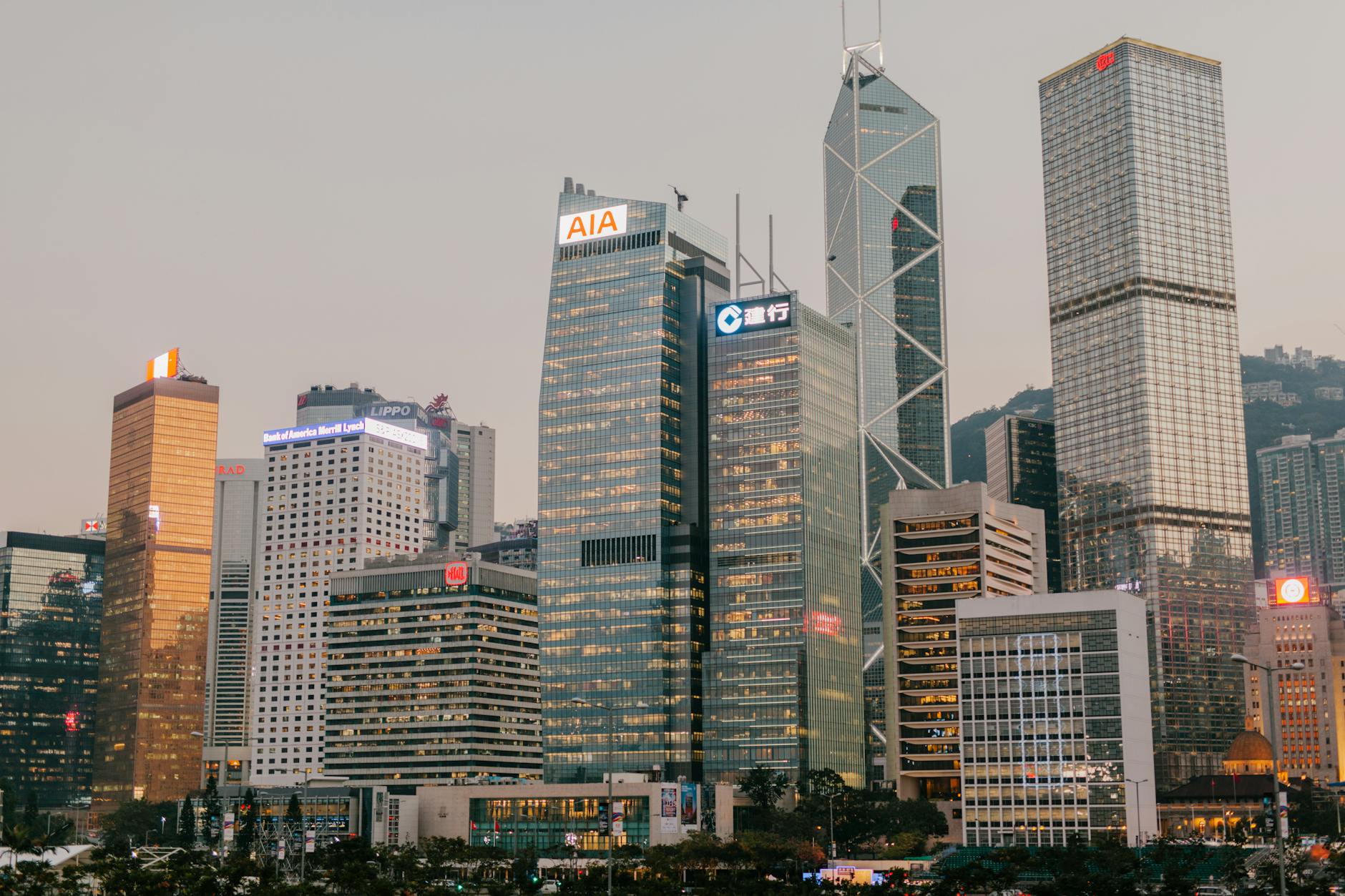
The 2025 fiscal landscape for family offices is being redrawn by two distinct regulatory trajectories. Hong Kong’s Inland Revenue (Amendment) (Tax Concessions for Family Offices) Ordinance 2023, which came into full effect in April 2024, has now had a full tax year to demonstrate its operational reality. Simultaneously, Singapore’s Monetary Authority (MAS) completed its most stringent round of variable capital company (VCC) and Section 13O/13U tax incentive reviews in late 2024, imposing new economic substance requirements and minimum asset thresholds. For a Hong Kong-based family office tax counsel or a UHNW principal weighing a relocation decision, the choice is no longer a simple matter of headline tax rates. It is a question of jurisdictional architecture: how each regime taxes capital gains, treats carried interest, structures exemptions for specified investment vehicles, and enforces substance. This comparison examines the tax mechanics, regulatory costs, and operational trade-offs for a family office with USD 50 million to USD 500 million in assets under management, drawing on the specific provisions of the HK IRO Cap. 112, the MAS Section 13O scheme, and the respective double tax treaty networks.
The Core Tax Concession: Section 112 vs. Section 13O
The operational heart of any family office comparison rests on the qualifying asset exemption. Both jurisdictions offer a near-zero effective tax rate on investment income, but the conditions to achieve that rate diverge significantly.
Hong Kong: The Family Office Concession Under IRO Cap. 112, Part 14A
Hong Kong’s concession, codified as Part 14A of the Inland Revenue Ordinance (Cap. 112), provides a 0% profits tax rate on “qualifying transactions” and “incidental transactions” of a “family-owned investment holding vehicle” (FIHV). The operative definition, found in section 88W, requires that the FIHV be wholly owned by one or more “family members” (defined broadly to include lineal descendants up to four generations, plus spouses, siblings, and step-relatives). The vehicle must be managed by a “single family office” (SFO) in Hong Kong. The SFO itself must satisfy a minimum asset threshold of HKD 240 million (approximately USD 30.7 million) in average asset value under management (AUM) for the year of assessment.
The key advantage for Hong Kong is the breadth of “qualifying transactions.” Under section 88X, these include transactions in shares, stocks, debentures, loan stocks, funds, futures contracts, foreign exchange, and commodities. This is broader than Singapore’s list, which historically excluded physical commodities and certain derivatives unless specifically approved. The Hong Kong concession also explicitly covers “incidental transactions” up to 5% of total trading receipts, providing a useful buffer for small-scale treasury or hedging activities.
Singapore: The Section 13O Onshore Fund Exemption
Singapore’s primary onshore vehicle for family offices is the Section 13O scheme under the Income Tax Act 1947. The MAS’s 2024 revisions, effective from 1 July 2024, raised the minimum AUM from SGD 10 million to SGD 20 million (approximately USD 14.8 million) and introduced a mandatory requirement for the family office to employ at least two investment professionals, one of whom must be a non-family member. The fund vehicle must be a Singapore-registered company or VCC, and its annual business spending must be at least SGD 200,000.
The Singapore regime imposes a stricter “specified income” test. Under Section 13O(4), qualifying income is limited to gains from the disposal of investments, interest, dividends, and income from derivatives directly related to qualifying investments. Unlike Hong Kong, Singapore does not automatically exempt income from physical commodities or real estate held directly. A family office holding a direct real estate portfolio in Singapore would need to use a separate property holding structure, adding compliance layers.
The critical difference in 2025 is the economic substance cost. A Hong Kong SFO with HKD 240 million AUM can operate with a single licensed investment manager (or even rely on an external licensed manager under an “authorised corporate director” arrangement) and no mandated minimum local spending. Singapore’s Section 13O, by contrast, requires a minimum SGD 200,000 in local business spending and two investment professionals. For a mid-sized family office, this translates to an annual compliance overhead of approximately SGD 80,000–120,000 (legal, audit, MAS reporting) versus Hong Kong’s approximately HKD 150,000–250,000 (audit, tax filing, CIR compliance).
Capital Gains, Carried Interest, and the Exit Tax Trap
Beyond the annual income exemption, the treatment of capital gains upon exit and the taxation of carried interest for professional managers are decisive factors for UHNW families.
Capital Gains: Hong Kong’s Territorial Advantage
Hong Kong does not impose a capital gains tax. This is a constitutional feature of the territorial source principle under IRO Cap. 112. As long as the gain arises from a capital transaction (not a trade) and the source of the gain is outside Hong Kong, it is not subject to Hong Kong profits tax. For a family office holding private equity investments or startup equity for 5–10 years, the entire gain on disposal—often the largest wealth event—is tax-free, provided the holding qualifies as a capital asset under the “badges of trade” test established in Commissioner of Inland Revenue v. Hydon Engineering Co. Ltd (1997).
Singapore, by contrast, also has no formal capital gains tax, but the Inland Revenue Authority of Singapore (IRAS) applies a “gains from the disposal of investments” test that can recharacterise a capital gain as trading income if the holding period is short or the frequency of transactions is high. The Section 13O exemption covers disposal gains, but only if the disposal is of a “qualifying investment.” Disposal of a directly-held subsidiary that is not a qualifying investment (e.g., a Singapore operating company) may be taxable at the 17% corporate rate. For a family office that holds operating businesses directly, this is a material risk.
Carried Interest: A 2025 Divergence
Hong Kong’s Inland Revenue (Amendment) (Tax Concessions for Carried Interest) Ordinance 2022 provides a 0% tax rate on “qualifying carried interest” derived from “qualifying investments” by “qualifying fund managers.” The regime is tied to the existing Hong Kong fund exemption regime. For a family office that also manages third-party capital (a “multi-family office” or MFO), this is a powerful tool. The carried interest is exempt from profits tax and, critically, from salaries tax for the individual investment professionals, provided the manager is licensed by the SFC and the fund is a “qualifying fund” under section 20AN.
Singapore’s Section 13D (carried interest) scheme, introduced in 2022 and enhanced in 2024, offers a 10% concessionary tax rate on carried interest for fund managers, not a full exemption. The rate is scheduled to rise to 12.5% from 2026. Furthermore, the Singapore scheme requires the carried interest to be derived from a “prescribed fund” and the manager to be a Singapore tax resident. For a Hong Kong-based manager moving to Singapore, the 10% rate is still attractive, but the 0% rate in Hong Kong is structurally superior for pure family office structures that do not need the Singapore treaty network.
Exit Tax for Migrating Families
A less discussed but critical factor is the potential exit tax for a family office principal moving from a high-tax jurisdiction to either Hong Kong or Singapore. Under IRC § 877A, a U.S. citizen or long-term resident who relinquishes citizenship or ceases to be a permanent resident is subject to an exit tax on the net unrealized gain of their worldwide assets exceeding USD 2 million (2025 threshold, indexed). Hong Kong’s lack of a capital gains tax means the exit tax liability is purely a U.S. federal matter, with no Hong Kong offset. Singapore’s lack of a capital gains tax is similar, but the IRAS’s potential recharacterisation risk on future disposals of assets that were part of the exit tax calculation adds complexity. No treaty between the U.S. and either Hong Kong or Singapore provides relief from the U.S. exit tax.
Substance, Compliance, and the Treaty Network
The cost of maintaining substance and the value of the double tax treaty network are the final pillars of the comparison.
Substance Requirements: HKMA Circular vs. MAS Guidelines
Hong Kong’s substance requirements for the family office concession are light. The Hong Kong Monetary Authority (HKMA) circular of May 2023 (ref: B10/1C) clarifies that the SFO must have a “physical office” in Hong Kong and employ at least one “qualified investment professional.” The qualified professional can be a family member, provided they hold a relevant degree or have at least two years of relevant experience. The HKMA does not mandate a minimum local expenditure.
Singapore’s MAS Guidelines on Section 13O, updated in November 2024, require the family office to demonstrate “economic substance” through the “four-factor test”: (1) the fund is managed in Singapore; (2) the investment decisions are made in Singapore; (3) the fund’s accounts are prepared and audited in Singapore; and (4) the fund’s board meetings are held in Singapore. For a family office with a single family member who also serves as the sole investment professional, the MAS now requires that at least one board meeting per year be held in Singapore with a quorum of non-family directors. This pushes the cost of compliance upward, requiring a Singapore-based director (typically a professional services firm) at an annual cost of SGD 15,000–30,000.
Double Tax Treaty Network: Singapore’s Edge
Singapore has 89 comprehensive double tax agreements (DTAs) in force as of 2025, including treaties with China (Article 4 of the China-Singapore DTA provides a clear tie-breaker for residency), India, Japan, and the United Kingdom. Hong Kong has 47 DTAs in force, with notably no treaty with the United States (only a Tax Information Exchange Agreement, TIEA) and a less comprehensive treaty with China (Article 4 of the China-HK Arrangement is a tie-breaker, but it is an Arrangement, not a full DTA, and does not cover all taxes).
For a family office with significant investment in India or Japan, Singapore’s treaty provides a 10% withholding tax rate on dividends and interest, versus Hong Kong’s 15% under its respective Arrangements. For a family office investing into mainland China, the Hong Kong Arrangement provides a 5% withholding tax on dividends if the Hong Kong company holds at least 25% of the Chinese company (Article 10), which is identical to Singapore’s treaty. However, Singapore’s treaty with China provides a 0% withholding rate on interest for certain financial institutions, which Hong Kong does not match.
Trust and Succession Planning: The Hong Kong Advantage
Hong Kong’s trust law, governed by the Trustee Ordinance (Cap. 29) and the Perpetuities and Accumulations Ordinance (Cap. 257), permits perpetual trusts (no rule against perpetuities since 2013). Singapore’s trust law, under the Trustees Act (Cap. 337), allows a maximum duration of 100 years for private trusts. For a family office focused on multi-generational wealth transfer, Hong Kong’s perpetual trust capability is a structural advantage. The Hong Kong family office concession also explicitly allows the FIHV to be held by a trust, with the trustee treated as the owner for the purposes of the concession (section 88W(3)). Singapore’s Section 13O does not have an equivalent explicit provision, requiring careful structuring of trust-held VCCs.
The Verdict: Which Jurisdiction Wins in 2025?
No single jurisdiction wins outright. The optimal choice depends on the family’s investment profile, geographic exposure, and succession timeline.
For a family office with a U.S. citizen principal: Hong Kong is the safer choice. The absence of a capital gains tax, the 0% carried interest rate, and the lighter substance requirements reduce the risk of a U.S. exit tax complication and lower the annual compliance burden. The lack of a US-HK DTA is a disadvantage for withholding tax on US-source dividends, but the US-HK TIEA is sufficient for information exchange, and the 30% US withholding tax on dividends can be mitigated through a US-domiciled corporate structure.
For a family office with heavy exposure to India, Japan, or ASEAN markets: Singapore’s broader treaty network provides a tangible tax saving on cross-border dividends and interest. The higher substance cost (SGD 200,000 minimum spend) is offset by the lower withholding tax rates on inbound investment. The 10% carried interest rate (rising to 12.5% in 2026) is less favourable than Hong Kong’s 0%, but for a purely investment-focused office, the treaty benefits outweigh the carried interest differential.
For a multi-generational family office focused on succession: Hong Kong’s perpetual trust capability and the explicit trust-holding provision in the family office concession make it the superior jurisdiction for long-term wealth preservation. Singapore’s 100-year trust limit is a structural constraint that requires periodic restructuring.
For a family office with direct real estate holdings: Hong Kong’s property tax regime (15% on net assessable value) is higher than Singapore’s property tax (10–20% depending on annual value), but Hong Kong’s family office concession does not cover direct real estate income. A family office holding real estate must pay the standard 16.5% profits tax on rental income. Singapore’s Section 13O also excludes direct real estate, but the Singapore regime allows a separate property holding company to be held by the VCC, with the dividend stream from the property company qualifying for the Section 13O exemption. This makes Singapore marginally more efficient for real estate-heavy portfolios.
Actionable Takeaways
- Run a treaty-weighted withholding tax projection: If your family office portfolio allocates more than 30% of assets to India, Japan, or ASEAN markets, Singapore’s DTA network will likely save more in withholding tax than the additional SGD 200,000 in substance costs.
- Structure the carried interest vehicle before the first fund close: Hong Kong’s 0% carried interest rate under the 2022 Ordinance requires the manager to be SFC-licensed and the fund to be a “qualifying fund” under section 20AN. File the SFC Type 9 licence application at least six months before the first carried interest allocation.
- For U.S. citizen principals, prioritize Hong Kong over Singapore for the principal’s tax residence: The U.S. exit tax under IRC § 877A applies regardless of the new jurisdiction, but Hong Kong’s territorial system provides a cleaner post-exit tax environment than Singapore’s potential recharacterisation risk on capital gains.
- If using a trust, ensure the trust deed explicitly appoints the trustee as the owner of the FIHV for Hong Kong concession purposes: The section 88W(3) provision is a narrow exception; a poorly drafted trust deed can disqualify the entire structure.
- Review the substance requirements annually against the latest HKMA or MAS circulars: Both jurisdictions are tightening enforcement. A missed substance requirement in Singapore (e.g., one board meeting without a non-family director) can trigger a retrospective clawback of the tax exemption for the entire year of assessment.
本文不構成稅務建議。涉及個人稅務情況請諮詢持牌會計師或稅務師。 This does not constitute tax advice. Consult a licensed CPA or tax advisor for your specific situation.